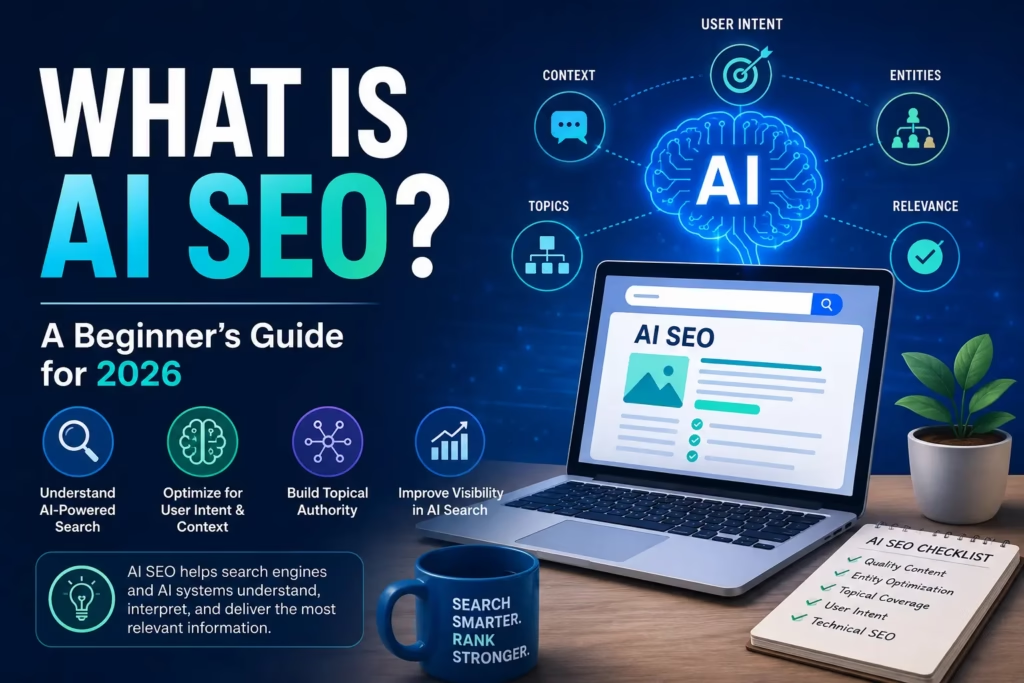
What Is AI SEO? A Beginner’s Guide for 2026
Search engine optimization has changed dramatically over the past decade. In the early days of SEO, ranking well often meant targeting specific keywords, building backlinks, and optimizing on-page elements. While these practices still play an important role, search engines have become significantly more sophisticated.
Modern search systems can understand context, relationships between concepts, user intent, and the meaning behind queries. At the same time, artificial intelligence is influencing how information is discovered, processed, and delivered to users.
As a result, businesses can no longer rely solely on traditional optimization techniques. They must also consider how AI systems interpret content and determine which sources provide the most relevant information.
This shift has led to the emergence of AI SEO. AI SEO is not a replacement for traditional SEO. Instead, it is an evolution of SEO that focuses on helping search engines and AI-powered systems better understand content, topics, entities, and user intent.
In this guide, you’ll learn what AI SEO is, how it works, why it matters, and how businesses can begin implementing AI SEO principles to improve their search visibility.
Table of Contents
What Is AI SEO?
AI SEO is the practice of optimizing content, websites, and digital assets to help search engines and AI-powered systems better understand, interpret, and connect information.
Unlike traditional SEO, which often focuses heavily on keywords and rankings, AI SEO emphasizes context, meaning, user intent, and topical relationships. The goal is to create content that is easy for both humans and intelligent search systems to understand.
AI SEO Explained in Simple Terms
Think of traditional SEO as helping search engines find your content. AI SEO helps search engines understand your content. For example, imagine two articles discussing the same topic.
The first article repeatedly uses a target keyword but provides limited context. The second article explains related concepts, answers common questions, connects supporting topics, and demonstrates expertise. While both articles may target the same keyword, the second article provides significantly more information for search systems to interpret.
This additional context helps AI-powered search systems understand what the content is about, how it relates to other topics, and when it should be shown to users.
Why AI SEO Matters in 2026
Search is becoming increasingly intelligent. Users now ask longer and more complex questions. Instead of searching for individual keywords, they often search using complete thoughts, detailed questions, and conversational language.
Examples include:
- What is the best SEO strategy for a new website?
- How does AI affect search engine optimization?
- What are the differences between entity SEO and keyword SEO?
To answer these queries effectively, search systems must understand language at a deeper level.
Businesses that structure content around topics, intent, entities, and relationships are better positioned to remain visible as search continues to evolve. This is why AI SEO has become an increasingly important part of modern digital marketing strategies.
Understanding AI SEO is only the first step. Once you begin implementing AI SEO principles, you’ll need to know whether your efforts are actually producing results. Our guide on AI SEO Strategy explains the key signals businesses can use to evaluate AI SEO performance, even when traditional traffic metrics remain flat.
How Is AI SEO Different From Traditional SEO?
One of the most common misconceptions about AI SEO is that it completely replaces traditional SEO. In reality, AI SEO builds upon traditional SEO rather than replacing it. The foundations of SEO remain important. Websites still need strong technical performance, high-quality content, internal linking, mobile usability, and a positive user experience.
However, AI SEO introduces a broader focus on meaning, context, relationships, and user intent. Instead of simply helping search engines find content, AI SEO helps search systems understand content at a deeper level.
Traditional SEO vs AI SEO
| Traditional SEO | AI SEO |
|---|---|
| Focuses heavily on keywords | Focuses on topics and context |
| Optimizes individual pages | Optimizes entire topic ecosystems |
| Targets search queries | Targets user intent |
| Relies on keyword relevance | Relies on semantic relevance |
| Measures rankings and traffic | Evaluates understanding and relevance |
| Focuses on individual content pieces | Focuses on relationships between content |
| Prioritizes keyword optimization | Prioritizes topic comprehension |
Both approaches aim to improve visibility, but they do so in different ways.
Traditional SEO Focuses on Keywords
Historically, SEO campaigns often revolved around identifying target keywords and optimizing pages around those terms.
For example, if a business wanted to rank for:
- Technical SEO
- Local SEO
- SEO audit
the primary objective was often to include those keywords strategically throughout the page. While keywords still matter, modern search systems are capable of understanding far more than exact keyword matches. Search engines now evaluate meaning, context, and the overall usefulness of content.
AI SEO Focuses on Understanding Topics
AI SEO takes a broader approach.
Instead of asking: “Which keyword should this page rank for?”
AI SEO asks: “How well does this content explain the topic?”
For example, an article about technical SEO might naturally discuss:
- Website crawling
- Indexing
- XML sitemaps
- Robots.txt
- Core Web Vitals
- Structured data
These related concepts help search systems understand the topic more comprehensively. Rather than focusing on a single keyword, AI SEO emphasizes building a complete understanding of a subject.
Traditional SEO Targets Queries
Traditional SEO often begins with a keyword list. The objective is to identify search terms with demand and create content that matches those queries.
Examples:
- technical SEO guide
- local SEO checklist
- SEO audit template
The focus is typically on what users type into search engines.
AI SEO Targets User Intent
AI SEO focuses on the reason behind a search. For example, two users may search for:
- how to improve website rankings
- why is my website not ranking
The wording is different, but the underlying intent is similar.
Both users are seeking guidance on improving search visibility. AI systems increasingly evaluate whether content satisfies the intent behind a query rather than simply matching specific keywords.
Traditional SEO Optimizes Individual Pages
Traditional SEO often evaluates pages independently. A page is optimized for a target keyword and measured according to its individual performance.
AI SEO takes a broader view. Search systems increasingly evaluate how pages connect to one another and contribute to a website’s overall expertise. A collection of related content often provides stronger signals than a single well-optimized page.
AI SEO Prioritizes Topic Ecosystems
Instead of creating isolated articles, AI SEO encourages businesses to build topic ecosystems. For example, an SEO agency might publish content covering:
- Technical SEO
- Local SEO
- SEO audits
- Content strategy
- AI SEO
- Entity SEO
Together, these articles demonstrate expertise across a broader subject area. This interconnected structure helps search systems understand both the depth and breadth of a website’s knowledge.
The Most Effective Strategy Combines Both
Businesses should not think of traditional SEO and AI SEO as competing approaches. The strongest SEO strategies combine elements of both.
Traditional SEO provides the technical and structural foundation. AI SEO enhances that foundation by improving how content communicates meaning, relationships, and expertise. As search technology continues to evolve, businesses that balance both approaches will be better positioned to earn long-term visibility and authority.
How Do AI Systems Understand Content?
One of the biggest differences between traditional search systems and modern AI-powered search is the ability to understand language more like humans do.
In the past, search engines primarily relied on matching keywords between a query and a webpage. Today, AI systems can evaluate meaning, context, relationships, and intent. Instead of simply identifying words on a page, they attempt to understand what those words represent and how they connect to broader topics. This shift is one of the primary reasons AI SEO has become increasingly important.
What Is Natural Language Processing (NLP)?
Natural Language Processing (NLP) is a branch of artificial intelligence that enables computers to understand, interpret, and process human language.
NLP helps search systems analyze:
- Words and phrases
- Sentence structure
- Context
- Meaning
- Relationships between concepts
For example, if a user searches for:
How can I improve my website’s visibility in search engines?
An AI-powered search system can understand that the user is likely interested in SEO, even if the query does not explicitly include the term “SEO.” This ability allows search systems to provide more relevant results based on meaning rather than exact keyword matches.
What Is Entity Recognition?
Entity recognition is the process of identifying specific people, places, organizations, products, concepts, and other distinct subjects within content.
Examples of entities include:
- ChatGPT
- Technical SEO
- Paris
- WordPress
- Tenz Digital
When AI systems encounter these entities, they attempt to understand:
- What the entity is
- How it relates to other entities
- Why it is relevant to the topic being discussed
This helps search systems build a deeper understanding of content beyond individual keywords.
How AI Understands Context
Context plays a crucial role in modern search. Consider the word: “Apple”
Without context, it could refer to:
- A fruit
- The technology company
AI systems analyze surrounding information to determine which meaning is intended.
For example:
Apple released a new iPhone.
The surrounding words clearly indicate that “Apple” refers to the technology company. This ability to understand context helps search systems provide more accurate and relevant results.
How AI Understands Relationships Between Concepts
AI systems do not evaluate information in isolation. They analyze how concepts connect to one another.
For example, a page discussing:
- Technical SEO
- Website crawling
- Indexing
- XML sitemaps
contains multiple related concepts.
Even if every section does not repeatedly mention “technical SEO,” AI systems can recognize the relationship between these topics. This allows search engines to build a broader understanding of what the content covers.
Why Keywords Alone Are No Longer Enough
Keywords remain important because they help indicate a page’s topic.
However, modern search systems evaluate far more than keyword usage.
They also consider:
- Topic relevance
- Context
- User intent
- Content structure
- Relationships between concepts
A page that thoroughly explains a topic often performs better than a page that simply repeats a target keyword multiple times. This is why successful AI SEO strategies focus on creating comprehensive, useful content rather than relying solely on keyword optimization.
The Key Takeaway
Modern AI-powered search systems are designed to understand information, not just match words. Through technologies such as Natural Language Processing, entity recognition, and contextual analysis, AI systems can evaluate the meaning behind content and determine how well it satisfies user needs.
For businesses, this means the future of SEO is increasingly about helping search systems understand topics, relationships, and expertise rather than simply targeting individual keywords.
What Are the Core Components of AI SEO?
AI SEO is not a single optimization technique. Instead, it consists of several interconnected components that help search systems understand content more effectively.
When these components work together, they create a stronger foundation for visibility in modern search environments. Understanding these core elements can help businesses develop a more comprehensive approach to search optimization.
The Core Components of AI SEO at a Glance
| Component | Purpose | Benefit |
|---|---|---|
| Content Intelligence | Creates comprehensive and relevant content | Improves topic understanding |
| Semantic Search Optimization | Enhances meaning and context | Increases content relevance |
| Entity SEO | Establishes relationships between concepts | Strengthens topic understanding |
| User Intent Optimization | Aligns content with searcher needs | Improves user satisfaction |
| Structured Data | Helps machines interpret information | Improves content discoverability |
Each component contributes to how AI-powered search systems evaluate and understand content.
Content Intelligence
Content intelligence focuses on creating information that thoroughly addresses a topic rather than targeting individual keywords. The objective is to provide enough context for both users and search systems to understand:
- What the topic is
- Why it matters
- How it connects to related concepts
For example, a strong article about technical SEO might naturally cover:
- Crawling
- Indexing
- XML sitemaps
- Core Web Vitals
- Structured data
This broader coverage helps search systems develop a more complete understanding of the subject.
Semantic Search Optimization
Semantic search optimization focuses on meaning rather than exact keyword matches. Instead of repeatedly using the same keyword, content should naturally include related terms, concepts, and supporting information.
For example, content about AI SEO may also discuss:
- Search intent
- Entities
- Natural Language Processing
- Machine learning
- Content relevance
These relationships help AI systems understand the overall topic and context.
Entity SEO
Definition: Entity SEO focuses on optimizing content around identifiable people, organizations, products, places, and concepts rather than relying solely on keywords.
An entity can be:
- A person
- A company
- A location
- A product
- An organization
- A concept
For example:
- ChatGPT
- WordPress
- Technical SEO
- Tenz Digital
When search systems understand how entities relate to one another, they can better interpret content and its relevance to user queries.
User Intent Optimization
User intent optimization focuses on understanding why a person is searching. Different users may search for similar topics while having different goals.
For example:
- “What is AI SEO?” suggests an informational intent.
- “Best AI SEO agency” suggests a commercial intent.
- “AI SEO services near me” suggests a transactional intent.
AI SEO aims to align content with the intent behind a query rather than focusing solely on the words used.
Structured Data and Machine Readability
Structured data provides additional information that helps machines understand website content.
It acts as a layer of context that explains:
- What a page is about
- Who created it
- What type of information it contains
- How different pieces of information relate to one another
Common examples include:
- Article schema
- FAQ schema
- Organization schema
- Review schema
While users may never see this information directly, it helps search systems interpret content more accurately.
Why These Components Work Together
Each component plays a different role in helping AI systems understand information.
Content intelligence provides depth.
Semantic optimization provides context.
Entities provide relationships.
User intent provides relevance.
Structured data provides clarity.
When combined, these elements create content that is easier for search systems to interpret and more useful for users. This is the foundation of effective AI SEO.
What Is Entity SEO and Why Does It Matter?
Entity SEO is the practice of optimizing content around clearly identifiable people, organizations, products, locations, concepts, and other entities rather than relying solely on keywords. As search engines become more sophisticated, they are increasingly focused on understanding what things are and how they relate to one another.
This allows search systems to build a deeper understanding of content and deliver more relevant results to users.
What Is an Entity?
An entity is a distinct thing that can be uniquely identified.
Entities can include:
- People
- Companies
- Products
- Places
- Events
- Concepts
For example:
- ChatGPT
- WordPress
- Paris
- Technical SEO
- Artificial Intelligence
Unlike keywords, entities have specific meanings and relationships that search systems can recognize.
Keywords vs Entities
Keywords and entities are often related, but they are not the same thing. A keyword is a word or phrase that users search for. An entity is a thing or concept that search systems can identify and understand.
Consider the keyword:
Apple
Without additional context, the keyword could refer to:
- The fruit
- The technology company
An entity provides clarity.
For example:
- Apple Inc.
- Apple fruit
Search systems use entities to understand which meaning is intended.
How Search Engines Use Entities
Modern search engines maintain massive databases of information that help them understand relationships between entities.
For example, search engines understand that:
- ChatGPT was developed by OpenAI.
- WordPress is a content management system.
- Technical SEO is a branch of search engine optimization.
These relationships help search systems interpret content more accurately and provide more relevant answers to users.
Why Entity SEO Is Becoming More Important
Search systems increasingly rely on understanding concepts rather than simply matching keywords. As a result, content that clearly establishes entities and their relationships often provides stronger signals than content focused only on keyword placement.
For example, an article about AI SEO might naturally reference:
- Search engines
- Artificial intelligence
- Natural Language Processing
- Entities
- User intent
- Structured data
Together, these entities help define the topic and provide context for search systems.
How Entity SEO Improves Content Understanding
Entity SEO helps search systems answer important questions:
- What is this content about?
- Which concepts are being discussed?
- How are these concepts related?
- Which topics demonstrate expertise?
The clearer these relationships become, the easier it is for search systems to understand the content’s purpose and relevance.
How to Strengthen Entity SEO
Businesses can improve entity optimization by:
Use Clear Entity References
Mention important people, organizations, products, and concepts naturally throughout the content.
Build Topic Clusters
Create supporting content around related entities and concepts.
Strengthen Internal Linking
Connect related pages to reinforce relationships between topics.
Use Structured Data
Schema markup helps search systems identify entities more accurately.
Maintain Consistent Branding
Consistent references to your business, services, and expertise help establish stronger entity recognition over time.
Example of Entity SEO in Practice
Imagine a website publishes content about technical SEO.
Instead of focusing exclusively on the keyword “technical SEO,” the content also discusses related entities such as:
- XML sitemaps
- Website crawling
- Indexing
- Core Web Vitals
- Structured data
These related entities help search systems understand the broader topic and establish stronger topical relevance.
The Future of Search Is Increasingly Entity-Based
As search technology continues to evolve, search engines are becoming better at understanding things rather than simply matching words. Keywords remain valuable because they reflect how users search.
However, entities provide the context and relationships that help search systems understand what content truly means. Businesses that focus on both keyword optimization and entity optimization will be better positioned to succeed as search becomes increasingly intelligent.
How Do You Implement AI SEO?
Understanding AI SEO is important, but understanding how to apply it is what drives results.
Many businesses assume AI SEO requires advanced technical knowledge or expensive software. In reality, most AI SEO improvements begin with creating content that is easier for both users and search systems to understand.
The following framework provides a practical approach that businesses can use to implement AI SEO on their websites.
Step 1: Understand User Intent
Every successful SEO strategy begins with understanding the reason behind a search.
Before creating content, ask:
- What problem is the user trying to solve?
- What information are they looking for?
- What outcome do they expect?
For example, someone searching for:
“What is AI SEO?”
is likely looking for education and understanding.
Someone searching for:
“AI SEO services”
is likely evaluating solutions.
Understanding intent helps ensure content aligns with user expectations.
Step 2: Build Topic Clusters
AI systems prefer websites that demonstrate expertise across an entire topic rather than a single article. Instead of publishing isolated content, create groups of related articles that cover different aspects of a subject.
For example, an AI SEO topic cluster might include:
- What Is AI SEO?
- AI SEO Strategy
- Entity SEO
- AI SEO Metrics
- AI Search Visibility
- Content Optimization for AI Search
Together, these articles create stronger topical relevance and provide more context for search systems.
Step 3: Optimize for Entities
Keywords help identify a topic. Entities help explain a topic.
When creating content, naturally reference important entities related to the subject.
For example, content about AI SEO may include entities such as:
- Search engines
- Artificial intelligence
- Natural Language Processing
- Structured data
- Content management systems
These entities help search systems better understand relationships between concepts.
Step 4: Improve Content Structure
Well-structured content is easier for both users and machines to process.
Effective content structure includes:
- Clear headings
- Logical section hierarchy
- Short paragraphs
- Bullet points
- Tables where appropriate
- FAQ sections
A strong structure helps search systems identify key topics and understand how information is organized.
Step 5: Strengthen Internal Linking
Internal links help establish relationships between pages.
When related content is connected strategically, search systems gain a clearer understanding of:
- Topic coverage
- Content hierarchy
- Subject expertise
For example, an article about AI SEO can link to supporting content about:
- Technical SEO
- Entity SEO
- SEO audits
- Content optimization
This creates a stronger topic ecosystem.
Step 6: Use Structured Data
Structured data provides additional context that helps search systems interpret information more accurately.
Examples include:
- Article schema
- FAQ schema
- Organization schema
- Breadcrumb schema
Structured data helps machines understand the purpose and context of content beyond what is visible on the page.
Step 7: Continuously Improve Content
AI SEO is not a one-time activity. Search behavior evolves, user expectations change, and new information becomes available.
Regularly review content to:
- Improve clarity
- Expand topic coverage
- Update outdated information
- Strengthen internal links
- Address new user questions
Continuous improvement helps maintain relevance and ensures content remains useful over time.
The Tenz Digital AI SEO Implementation Checklist
Use this checklist when evaluating any piece of content:
✓ The content satisfies a clear user intent
✓ Related topics are covered comprehensively
✓ Important entities are included naturally
✓ Headings and structure are easy to follow
✓ Internal links connect relevant resources
✓ Structured data is implemented where appropriate
✓ Content is reviewed and updated regularly
The businesses that consistently apply these practices are better positioned to build long-term authority and adapt as search technology continues to evolve.
Implementing AI SEO is important, but measuring success is equally critical. Learn how to evaluate AI visibility, brand demand, and other emerging indicators in our comprehensive guide to AI SEO Strategy.
What Are the Best AI SEO Practices?
AI SEO is not about finding shortcuts or exploiting algorithms. The most successful AI SEO strategies focus on creating content that is useful, trustworthy, and easy for both users and search systems to understand.
While search technology continues to evolve, several best practices remain consistently effective across different search environments.
Create Helpful Content First
One of the most important principles of AI SEO is prioritizing usefulness over optimization. Many businesses make the mistake of creating content primarily for search engines.
However, modern search systems increasingly reward content that genuinely helps users solve problems.
Before publishing content, ask:
- Does this answer the user’s question?
- Does it provide actionable guidance?
- Would someone find it valuable even if search engines did not exist?
Content that serves users effectively is more likely to perform well over the long term.
Focus on Topics Rather Than Individual Keywords
Keywords remain valuable, but they should not be the sole focus of a content strategy. AI-powered search systems evaluate how comprehensively a topic is covered.
Instead of creating multiple thin articles targeting slight keyword variations, businesses should focus on building resources that explore a topic in depth.
A topic-focused approach helps:
- Improve content quality
- Strengthen topical relevance
- Reduce content duplication
- Enhance user experience
Demonstrate Experience and Expertise
Search systems increasingly evaluate signals that indicate expertise and credibility.
Businesses can strengthen these signals by sharing:
- Real-world examples
- Practical experience
- Original insights
- Industry observations
- Lessons learned
Content that reflects genuine expertise often provides more value than content that simply repeats information available elsewhere.
Make Content Easy to Understand
Complex topics do not require complicated writing. In many cases, the clearest explanation is also the most effective.
To improve readability:
- Use descriptive headings
- Keep paragraphs concise
- Explain technical concepts clearly
- Break information into logical sections
- Use examples where appropriate
Content that is easy to understand benefits both users and search systems.
Build Comprehensive Topic Coverage
Search systems often evaluate how thoroughly a topic is covered.
For example, an article about AI SEO may naturally include discussions about:
- User intent
- Entities
- Semantic search
- Structured data
- Content strategy
Comprehensive coverage helps search systems develop a stronger understanding of the subject matter.
Maintain Consistency Across Your Website
Consistency helps establish trust.
Businesses should strive to maintain consistency in:
- Branding
- Content quality
- Topic focus
- Internal linking
- Publishing standards
Over time, consistency contributes to stronger topical authority and a more cohesive user experience.
Keep Content Current
Search behavior, technology, and industry best practices continue to evolve. Content that was accurate a year ago may no longer reflect current realities.
Regular reviews help ensure that content remains:
- Accurate
- Relevant
- Useful
- Competitive
Maintaining content quality over time is often just as important as creating new content.
Prioritize User Experience
Even the best content can struggle if users have difficulty accessing or consuming it.
Businesses should pay attention to:
- Mobile usability
- Page speed
- Navigation
- Accessibility
- Readability
A positive user experience supports both engagement and long-term search performance.
Avoid Short-Term SEO Tactics
Many SEO tactics deliver temporary results but fail to provide long-term value.
Examples include:
- Excessive keyword stuffing
- Low-quality content production
- Manipulative link-building practices
- Publishing content solely for rankings
AI SEO is most effective when built around sustainable practices that prioritize quality and usefulness.
The Key Takeaway
The best AI SEO practices are ultimately aligned with the goals of modern search systems. Search engines and AI-powered platforms aim to deliver accurate, relevant, and helpful information to users.
Businesses that focus on expertise, clarity, comprehensive coverage, and user value are more likely to build lasting visibility as search technology continues to evolve.
What Mistakes Should You Avoid in AI SEO?
As AI SEO continues to evolve, many businesses are eager to adapt their strategies. However, some organizations make the mistake of chasing trends instead of focusing on the fundamentals that help search systems understand content effectively.
Avoiding common mistakes can save time, improve content quality, and create a stronger foundation for long-term search visibility.
Mistake #1: Treating AI SEO as a Completely Separate Discipline
One of the most common misconceptions is that AI SEO replaces traditional SEO. In reality, AI SEO builds upon existing SEO principles.
Businesses still need:
- Technical SEO
- High-quality content
- Internal linking
- User experience optimization
- Website performance
AI SEO works best when it complements these existing practices rather than replacing them.
Mistake #2: Obsessing Over Keywords
Keywords remain important, but relying on them exclusively can limit content quality. Many websites continue to focus heavily on exact-match keywords while neglecting context and topic depth.
For example, an article about AI SEO should naturally discuss related concepts such as:
- Search intent
- Entities
- Semantic search
- Structured data
Content that focuses only on keyword placement often provides a weaker user experience and less context for search systems.
Mistake #3: Creating Thin Content
Thin content occurs when a page covers a topic superficially without providing meaningful value.
Examples include:
- Very short articles
- Repetitive content
- Pages created solely to target keywords
- Content lacking examples or explanations
AI-powered search systems increasingly reward comprehensive resources that answer questions thoroughly.
Businesses should focus on quality and depth rather than publishing large volumes of low-value content.
Mistake #4: Ignoring User Intent
Some websites create content based solely on keywords without considering what users actually want.
For example, a user searching:
What is AI SEO?
expects education and explanation.
They are not necessarily looking to purchase a service immediately.
When content fails to align with user intent, it becomes less useful regardless of how well it is optimized.
Mistake #5: Neglecting Entity Optimization
Many SEO strategies still overlook entities entirely. A page may target a keyword successfully while failing to establish clear relationships between important concepts.
As search systems become more entity-driven, businesses should ensure their content includes relevant entities and supporting context. This helps search systems understand the topic more accurately.
Mistake #6: Publishing Isolated Content
Publishing individual articles without connecting them to related content limits a website’s ability to demonstrate expertise. For example, a single article about AI SEO is helpful.
However, a collection of related resources covering:
- Entity SEO
- Semantic search
- User intent
- Structured data
- Content strategy
creates a much stronger signal of topical expertise.
Topic clusters help both users and search systems navigate information more effectively.
Mistake #7: Overlooking Content Structure
Even high-quality information can become difficult to understand if it is poorly organized.
Common structural issues include:
- Large blocks of text
- Vague headings
- Inconsistent formatting
- Missing hierarchy
A clear structure improves readability and helps search systems identify key topics more easily.
Mistake #8: Failing to Update Content
Search behavior evolves over time. Industry trends change. New technologies emerge. Content that remains untouched for years may gradually lose relevance.
Regular updates help ensure that information remains accurate, useful, and aligned with current best practices.
Mistake #9: Relying Entirely on AI-Generated Content
AI tools can assist with research, brainstorming, and content creation.
However, publishing AI-generated content without human review often results in:
- Generic explanations
- Limited expertise
- Repetitive information
- Lack of original insights
The most effective content combines the efficiency of AI with human experience, judgment, and expertise.
Mistake #10: Looking for Shortcuts
Many businesses search for quick tactics that promise immediate results.
However, sustainable AI SEO is built on:
- Expertise
- Quality content
- Strong site architecture
- Clear topic coverage
- Consistent improvement
Shortcuts may produce temporary gains, but long-term success typically comes from creating resources that genuinely help users.
The Key Takeaway
Most AI SEO mistakes stem from focusing on tactics rather than understanding.Search systems are becoming increasingly effective at interpreting content, context, and user needs.
Businesses that prioritize quality, expertise, topic coverage, and user value are more likely to build lasting visibility than those searching for shortcuts or algorithm tricks.
Which Tools Can Help With AI SEO?
AI SEO is not about finding a single tool that automates everything. Instead, successful AI SEO strategies rely on a combination of tools that help businesses understand user behavior, identify opportunities, improve content quality, and monitor website performance.
The following tools can support different aspects of an AI SEO strategy.
Google Search Console
Google Search Console remains one of the most valuable tools for SEO professionals. It provides insights into how Google discovers, indexes, and displays website content.
Businesses can use Search Console to:
- Monitor search performance
- Identify indexing issues
- Analyze search queries
- Track impressions and clicks
- Discover content opportunities
For many websites, Search Console serves as the primary source of search visibility data.
Google Analytics 4
Google Analytics 4 helps businesses understand how users interact with their websites. Unlike Search Console, which focuses on search performance, Google Analytics focuses on user behavior after visitors arrive on the site.
Common uses include:
- Tracking user engagement
- Measuring conversions
- Analyzing traffic sources
- Understanding visitor behavior
- Evaluating content performance
These insights help businesses identify which content delivers the most value.
Semrush
Semrush is a comprehensive SEO and digital marketing platform.
It can assist with:
- Keyword research
- Competitor analysis
- Content planning
- Backlink monitoring
- Site audits
Businesses often use Semrush to identify content gaps and discover opportunities for expanding topic coverage.
Ahrefs
Ahrefs is widely known for its backlink database and SEO research capabilities.
It can help businesses:
- Analyze backlinks
- Research keywords
- Evaluate competitors
- Monitor rankings
- Identify content opportunities
Many SEO professionals use Ahrefs to understand how competitors build authority and attract visibility.
ChatGPT
ChatGPT can support various stages of content creation and optimization.
Common use cases include:
- Brainstorming content ideas
- Generating content outlines
- Simplifying complex topics
- Identifying user questions
- Improving content structure
However, businesses should always review and refine AI-generated content to ensure accuracy, originality, and expertise.
Perplexity
Perplexity can be useful for research and information gathering.
Many content creators use it to:
- Explore topics quickly
- Discover related concepts
- Identify common questions
- Review cited sources
- Understand emerging trends
It can serve as a helpful research companion when developing content strategies.
Schema Markup Generators
Structured data plays an important role in helping search systems understand content.
Schema markup tools can assist with creating:
- FAQ schema
- Article schema
- Organization schema
- Breadcrumb schema
These tools simplify implementation and reduce the likelihood of technical errors.
Content Optimization Tools
Content optimization platforms can help evaluate how comprehensively a topic is covered.
These tools often analyze:
- Topic relevance
- Content depth
- Related concepts
- Readability
- Optimization opportunities
When used correctly, they can help strengthen content quality and improve topic coverage.
How to Choose the Right Tools
The best tool depends on your goals.
| Goal | Recommended Tools |
|---|---|
| Search performance monitoring | Google Search Console |
| User behavior analysis | Google Analytics 4 |
| Keyword and competitor research | Semrush, Ahrefs |
| Content ideation and outlining | ChatGPT |
| Research and topic exploration | Perplexity |
| Structured data implementation | Schema markup tools |
| Content optimization | Content optimization platforms |
No single tool can handle every aspect of AI SEO.
The most effective approach is to combine multiple tools and use them to support a broader strategy focused on user intent, topic coverage, content quality, and long-term expertise.
The Key Takeaway
Tools can improve efficiency, but they do not replace strategy. Successful AI SEO depends on understanding users, creating valuable content, organizing information effectively, and continuously improving the website experience.
The right tools simply make those tasks easier to execute and measure.
What Are the Benefits of AI SEO?
AI SEO helps businesses create content that is easier for search engines and AI-powered systems to understand, interpret, and surface to users.
As search technology evolves, organizations that adopt AI SEO principles can benefit from greater visibility, stronger topical authority, improved content quality, and a more sustainable approach to search optimization.
Rather than focusing solely on rankings, AI SEO helps businesses prepare for a future where intelligent search systems play an increasingly important role in content discovery.
Improved Visibility Across Search and AI Systems
One of the primary benefits of AI SEO is improved visibility across both traditional search engines and AI-powered search platforms.
When content is well-structured, contextually rich, and aligned with user intent, search systems can better understand:
- What the content is about
- Which topics it covers
- How it relates to other concepts
- When it should be presented to users
This improved understanding increases the likelihood that content will appear across modern search experiences.
Stronger Topical Authority
AI SEO encourages businesses to develop expertise across entire subject areas rather than focusing on isolated keywords. By publishing comprehensive resources that address related questions and concepts, organizations can build stronger topical authority.
For example, an SEO agency that publishes content about:
- Technical SEO
- SEO audits
- Local SEO
- Content strategy
- AI SEO
demonstrates broader expertise than a website with only a few disconnected articles. Over time, this can help establish the website as a trusted source of information within its niche.
Better Content Quality
AI SEO promotes content that prioritizes meaning, context, and user value.
Instead of creating pages solely to target keywords, businesses are encouraged to develop resources that:
- Answer questions thoroughly
- Explain concepts clearly
- Address related topics
- Provide useful guidance
This often leads to higher-quality content that benefits both users and search systems.
Improved User Experience
Many AI SEO best practices naturally improve the user experience.
Examples include:
- Clear content structure
- Logical navigation
- Descriptive headings
- Comprehensive explanations
- Easy-to-read formatting
When information is organized effectively, users can find answers more quickly and engage with content more easily.
More Relevant Website Visitors
AI SEO focuses heavily on understanding user intent. As a result, businesses often attract visitors who are genuinely interested in the topics being discussed.
Content that closely aligns with user needs tends to generate stronger engagement and create a better overall experience for visitors.
Better Content Scalability
As websites grow, maintaining quality becomes increasingly important.
AI SEO frameworks help businesses create repeatable processes for:
- Content planning
- Topic development
- Internal linking
- Content updates
These processes make it easier to scale content production while maintaining consistency and quality.
Greater Adaptability to Future Search Changes
Search technology continues to evolve rapidly. Businesses that focus on user intent, semantic relevance, entities, and content quality are often better prepared to adapt to future developments.
Rather than relying on short-term tactics, AI SEO builds a foundation that remains valuable as search systems become more sophisticated.
Long-Term Growth Potential
Perhaps the greatest benefit of AI SEO is its focus on sustainability. By creating useful, well-structured, and comprehensive content, businesses build assets that can continue providing value long after they are published.
This long-term approach helps create a stronger foundation for future growth and visibility.
The Key Takeaway
The benefits of AI SEO extend beyond rankings and keywords. As AI-powered search experiences continue to evolve, businesses are increasingly focusing on how content becomes part of AI-generated responses. Our What Is GEO? guide explains how Generative Engine Optimization helps improve citation and reference opportunities across AI platforms.
So, by helping search engines and AI-powered systems better understand content, AI SEO contributes to stronger visibility, improved content quality, better user experiences, and greater long-term resilience in an evolving search landscape.
AI SEO Use Cases for Different Businesses
AI SEO is not limited to large enterprises or technology companies.
Businesses of all sizes can apply AI SEO principles to improve how search engines and AI-powered platforms understand their content, products, services, and expertise.
While the core principles remain the same, the implementation often varies depending on the type of business.
AI SEO for Small Businesses
Small businesses often compete with larger brands that have bigger marketing budgets and stronger domain authority.
AI SEO helps level the playing field by encouraging businesses to focus on expertise, relevance, and topic coverage rather than publishing large volumes of content.
For example, a small accounting firm could create content covering:
- Tax planning
- Business accounting
- Bookkeeping
- Financial compliance
- Small business finance
Over time, this content ecosystem helps establish authority within a specific niche.
AI SEO for Local Businesses
Local businesses can use AI SEO to improve visibility for location-based searches and service-related queries.
Examples include:
- Restaurants
- Dental clinics
- Law firms
- Home service companies
- Medical practices
In addition to traditional local SEO practices, businesses should create content that answers common customer questions and demonstrates local expertise.
Examples might include:
- Service guides
- Local market insights
- Community-focused resources
- Frequently asked questions
This helps search systems better understand both the business and the services it provides.
AI SEO for Ecommerce Stores
Ecommerce businesses often focus heavily on product pages.
However, AI SEO encourages a broader content strategy that supports the customer journey.
Examples include:
- Product comparison guides
- Buying guides
- Product tutorials
- Industry insights
- Frequently asked questions
This additional content provides context that helps search systems understand products and their relationships to customer needs.
AI SEO for SaaS Companies
Software companies frequently operate in competitive search environments.
AI SEO can help SaaS businesses build authority by creating educational resources that explain:
- Industry challenges
- Product categories
- Use cases
- Implementation strategies
- Best practices
Rather than focusing exclusively on product features, SaaS companies can create content that helps users solve problems and make informed decisions.
AI SEO for Agencies
Marketing agencies, SEO agencies, and consulting firms can use AI SEO to demonstrate expertise and showcase industry knowledge.
For example, an SEO agency may publish content covering:
- Technical SEO
- SEO audits
- Local SEO
- AI SEO
- Content strategy
This approach helps build topical authority while providing valuable resources for potential clients.
AI SEO for Publishers and Content Creators
Publishers and content creators can use AI SEO to improve content discoverability and strengthen topic coverage.
Rather than producing isolated articles, publishers can organize content into topic clusters that help both readers and search systems navigate related information.
This strategy supports stronger content organization and encourages deeper exploration of a website’s resources.
The Key Takeaway
AI SEO is not tied to a specific industry or business model.
Whether you operate a local business, ecommerce store, SaaS company, agency, or publishing website, the goal remains the same: create content that clearly communicates expertise, addresses user needs, and helps search systems understand the topics you cover.
The businesses that align their content strategy with these principles are better positioned to build authority and maintain visibility as search continues to evolve.
The Tenz Digital AI SEO Pyramid
Many businesses approach AI SEO by focusing on isolated tactics such as keyword research, content creation, or structured data. While these elements are important, they are most effective when built upon a strong foundation.
At Tenz Digital, we view AI SEO as a pyramid where each level supports the next. Skipping a level often limits the effectiveness of everything built above it.
Level 1: Technical Foundation
The base of the pyramid is technical SEO. Before search engines and AI-powered systems can understand content, they must be able to access, crawl, and process it efficiently.
This foundation includes:
- Website crawlability
- Mobile usability
- Site speed
- Internal linking
- Structured architecture
- Indexability
Without a strong technical foundation, even the best content may struggle to achieve visibility.
Level 2: Content Quality
Once the technical foundation is established, the next priority is content quality.
Content should:
- Answer user questions
- Provide accurate information
- Demonstrate expertise
- Offer practical value
- Address user needs
High-quality content creates the information that search systems evaluate and users consume.
Level 3: Entity Optimization
The third level focuses on helping search systems understand important concepts and relationships.
This includes:
- Identifying key entities
- Establishing topical connections
- Using consistent terminology
- Reinforcing relationships between concepts
Entity optimization helps search systems build a clearer understanding of what your content represents.
Level 4: Topical Authority
Topical authority is developed through comprehensive coverage of a subject area. Rather than relying on a single article, businesses should create interconnected resources that demonstrate expertise across related topics.
Examples include:
- Pillar pages
- Topic clusters
- Supporting resources
- Educational content
- Industry-specific guides
The goal is to demonstrate depth and breadth of knowledge.
Level 5: AI discovery & Visibility
At the top of the pyramid is AI visibility. When the lower levels are properly established, businesses are better positioned to earn visibility across modern search experiences.
AI visibility is the result of:
- Strong technical foundations
- High-quality content
- Effective entity optimization
- Demonstrated topical authority
It is not a separate tactic. It is the outcome of executing the lower levels successfully.
How to Use the Pyramid
When evaluating an AI SEO strategy, start from the bottom and work upward.
Many businesses attempt to improve visibility before addressing technical issues, content gaps, or weak topic coverage.
The pyramid provides a simple framework for prioritization:
- Build the technical foundation.
- Improve content quality.
- Optimize for entities.
- Develop topical authority.
- Expand visibility across modern search experiences.
Organizations that follow this progression are often better positioned for sustainable growth than those focusing on isolated tactics.
The Key Takeaway
AI SEO is not a collection of disconnected activities. It is a structured process that begins with strong fundamentals and progresses toward greater authority and visibility. The Tenz Digital AI SEO Pyramid provides a practical framework for understanding how different components of AI SEO work together to support long-term success.
Tenz Digital Insight
Many websites spend months expanding keyword lists while overlooking topic relationships. In our experience, improving content structure, entity coverage, and internal linking often creates stronger long-term gains than simply targeting additional keywords.
Frequently Asked Questions About AI SEO
What Is AI SEO?
AI SEO is the practice of optimizing content, websites, and digital assets to help search engines and AI-powered systems better understand information, user intent, and topic relationships. It combines traditional SEO principles with modern approaches such as semantic search, entity optimization, and content intelligence.
Is AI SEO Different From Traditional SEO?
Yes, but it is not a replacement for traditional SEO.
Traditional SEO focuses heavily on keywords, rankings, technical optimization, and search visibility. AI SEO expands on these foundations by emphasizing context, meaning, entities, and user intent.
The most effective strategies combine both approaches.
What Is Entity SEO?
Entity SEO is the process of optimizing content around identifiable people, organizations, products, places, and concepts rather than relying solely on keywords.
Search systems use entities to understand relationships between topics and improve content interpretation.
Does AI SEO Replace Traditional SEO?
No.
Technical SEO, content quality, internal linking, mobile usability, and website performance remain essential.
AI SEO builds upon these foundations and helps search systems better understand content and context.
Can Small Businesses Benefit From AI SEO?
Absolutely.
Many AI SEO principles, such as improving content quality, understanding user intent, building topic clusters, and optimizing for entities, can be implemented by businesses of any size.
Small businesses often benefit from creating highly focused content that demonstrates expertise within a specific niche.
How Long Does AI SEO Take to Produce Results?
There is no fixed timeline.
Results depend on factors such as competition, content quality, website authority, topic coverage, and implementation quality.
Like traditional SEO, AI SEO is generally a long-term strategy rather than a quick solution.
What Skills Are Needed for AI SEO?
Successful AI SEO typically requires a combination of:
- SEO fundamentals
- Content strategy
- Keyword research
- User intent analysis
- Entity optimization
- Structured data implementation
- Analytics and reporting
A strong understanding of how search systems interpret information is also valuable.
What Tools Can Help With AI SEO?
Several tools can support AI SEO initiatives, including:
- Google Search Console
- Google Analytics 4
- Semrush
- Ahrefs
- ChatGPT
- Perplexity
These tools can assist with research, content planning, optimization, performance monitoring, and topic discovery.
Is AI-Generated Content Good for SEO?
AI-generated content can be useful when combined with human expertise and editorial oversight.
Businesses should review AI-generated content for:
- Accuracy
- Originality
- Relevance
- Clarity
- User value
The best results often come from combining AI efficiency with human experience and judgment.
What Is the Future of AI SEO?
The future of AI SEO will likely involve greater emphasis on context, entities, user intent, and content quality.
Businesses that focus on creating useful, well-structured, and comprehensive resources will be better positioned to adapt as search technology continues to evolve.
Conclusion
AI SEO represents the next stage in the evolution of search engine optimization. As search systems become more capable of understanding language, context, relationships, and user intent, businesses must move beyond strategies that focus solely on keywords and rankings.
Successful AI SEO is built on a combination of:
- User intent understanding
- Semantic relevance
- Entity optimization
- Content quality
- Topic authority
- Technical foundations
Together, these elements help search engines and AI-powered systems interpret content more accurately and connect users with the information they need. While the technologies behind search continue to evolve, the underlying objective remains the same: providing valuable, relevant, and trustworthy information.
Businesses that focus on creating comprehensive resources, demonstrating expertise, and helping users solve real problems will be better positioned to succeed in an increasingly AI-driven search landscape.
AI SEO is not about replacing traditional SEO. It is about expanding and strengthening it to align with how modern search systems understand information. Whether you are a business owner, marketer, content creator, or SEO professional, understanding AI SEO today can help you prepare for the future of search.
The organizations that adapt early and invest in high-quality, user-focused content will have a stronger foundation for long-term visibility, authority, and growth.

Tenzin Tashi is an SEO and WordPress FSE web design specialist at Tenz Digital. He focuses on on-page and technical SEO, keyword research, and building SEO-friendly websites using modern analytics tools.